 ballparker
What is a calorie, in one line?
A unit of energy in food. Counting writes that energy down. It does not set what you should eat.
The first week. A range, not a target. Updated November 10, 2026.
In the first week, learn what a calorie is and log the meals you actually eat. Read each estimate as a range, not as a target. Do not pick a daily number from this page. If you want a target, ask a doctor or a registered dietitian. This page is not medical advice. Keeping the habit after the first week is a different page: how to stick with calorie tracking.
A calorie is a unit of energy. On a food label, the word calorie means the energy in that food. Counting writes down the energy in what you ate. It is not a score, and it is not a plan.
Protein, carbohydrate, and fat all carry energy. Fat carries more energy for the same amount of food than protein or carbohydrate. That is why a small amount of oil or butter can change the log even when the plate looks the same. You do not need a chart of those amounts to start. You need to notice they are there.
A single number looks finished. The meal is not. Portion size, cooking, and what a photo cannot show are uncertain. A range admits that. A lone number hides it.
Ballparker’s estimate, from a photo or a description, is a range. It starts at 1 serving. It is not a lab count. How close a photo estimate can get is on how accurate photo calorie apps are. Do not treat the middle of the range as a target.
Log the meal in front of you. Do not wait for a perfect day.
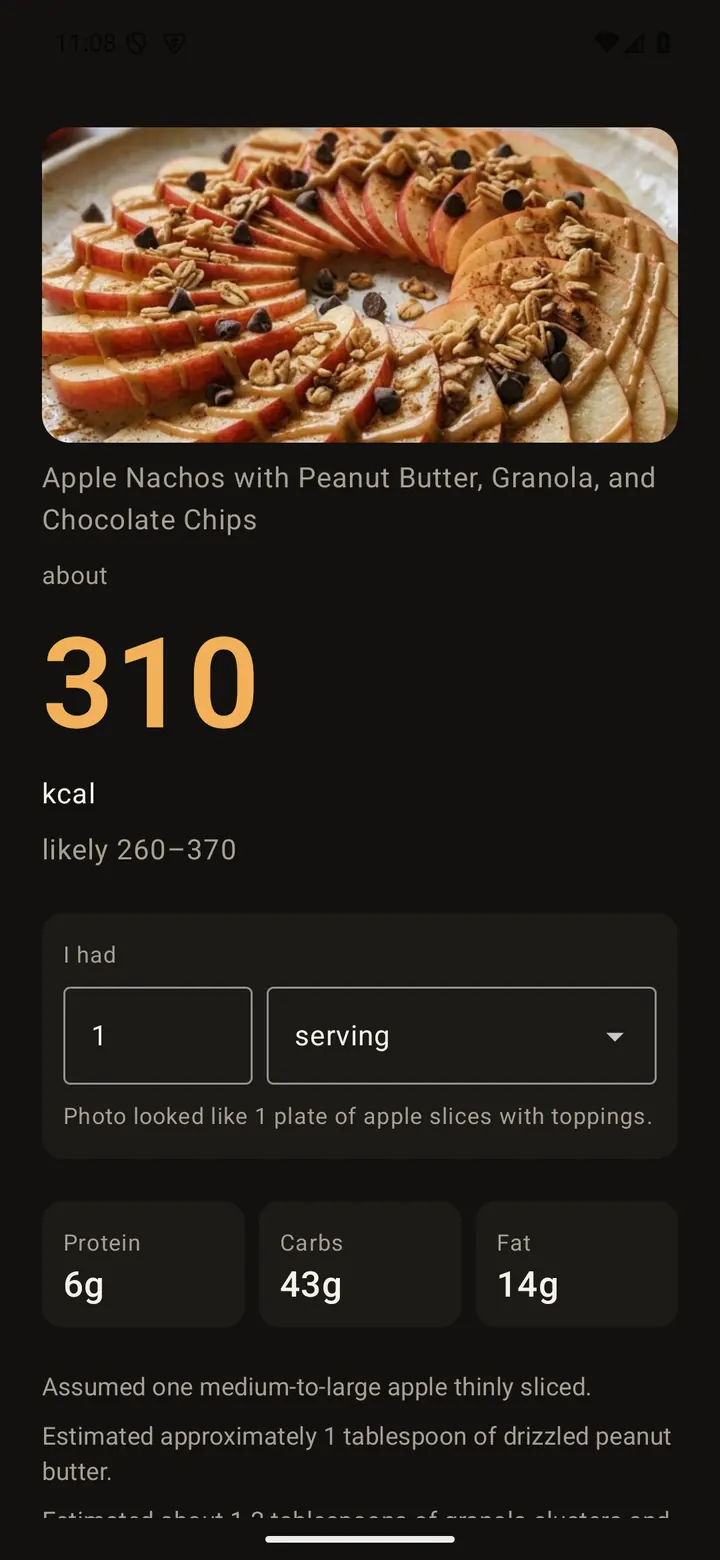
You do not need a food scale to start. That method is calorie tracking without a food scale. Judging size with your hand and the plate is how to estimate portion sizes by eye. Those pages are different methods. This page is the first log.
When the meal is from a restaurant and the menu has no numbers, see how to estimate restaurant calories.
These are the common misses in the first week.
Oil and butter are not in the estimate. A gloss on the pan or a pat on the vegetables will not appear on its own. Add oil and butter yourself.
Drinks are easy to skip because they are not on the plate. If you had coffee, tea, juice, soda, or alcohol, name the drink and log it. Do not turn the drink into a target.
Before you log, fix a wrong assumption in plain words. The example to use is “no sugar, 18% cream”. If the serving count is wrong, change the amount before you log.
After you log, edit the name, the calories, or the macros, or start a new photo or description. A logged meal does not re-estimate from a note. Do not keep a wrong number because the first one looked exact.
The first week is practice at logging, not a diet. This page will not give you a calorie target. Ask a doctor or a registered dietitian for a target. This page is not medical advice.
What counts as a logged day, and when to pause, is on how to stick with calorie tracking.
A unit of energy in food. Counting writes that energy down. It does not set what you should eat.
No. This page will not give you one. Ask a doctor or a registered dietitian for a target.
A single number looks more exact than the meal is. Use the range. The estimate starts at 1 serving and is not a lab count.
Drinks, oil, and butter. Oil and butter are not in the estimate. Add them yourself. If you drank it, log the drink.
Before the log, re-estimate in plain words, for example “no sugar, 18% cream”. After the log, edit the name, calories, or macros, or start a new photo or description.
Ballparker is on the App Store and Google Play.
Get it on the App StoreGet it on Google Play
New subscribers start with a 7-day free trial, then a monthly or yearly plan. Cancel before day 7 and you pay nothing.